- Blog
- November 12, 2026
AI for Accounting Firms: Can You Safely Use AI Tools with Client Tax Data?
G360 Technologies

Yes, CPA and accounting firms can use AI tools such as ChatGPT, Claude and Copilot with client data. But not the way most firms use them today.
AI for accounting firms has gone from experiment to everyday tool faster than almost anyone expected. A June 2026 survey from CPA.com and Blue J found that 60% of tax firms now use AI for research at least once a week, up from 33% just a year earlier. Most say it saves real time.
The rules on client tax data didn't speed up to match. Here's what they expect, and what safe AI use actually looks like.
What the rules say about client tax data
Three sets of rules matter most for a CPA firm thinking about AI. None of them mention AI tools by name. All of them apply to the data that goes into it.
Section 7216. The IRS rules under Section 7216 limit how tax return preparers can use and disclose client information. The definitions are broad. "Tax return information" covers anything a client provides in connection with preparing a return, including their name, address and ID number. A "disclosure" is making that information known "to any person in any manner whatever."
The rules include consent requirements and some exceptions, so whether a specific AI tool counts as a problem depends on how it's used. But the starting point is clear: client tax information isn't something to share with an outside service casually.
The FTC Safeguards Rule. Tax preparation firms are named in the rule as covered businesses. It requires a written information security program, access controls, encryption, multi-factor authentication and, importantly, oversight of service providers that handle customer information.
IRS Publication 5708. The IRS spells it out in its guide to written information security plans: "tax and accounting professionals are considered financial institutions, regardless of size." That means every firm, from a sole practitioner to a large partnership, needs a written plan for protecting client data.
Put those together and an AI tool looks a lot like any other service provider handling client information. It should be in your security plan, with clear rules on what data it can see.
Why the usual answers fall short
Banning AI. Some firms simply block ChatGPT. In practice, staff often switch to personal accounts on their phones, and the firm loses all visibility. We've written about that trade-off before.
Buying an enterprise plan. Business versions of AI tools offer stronger privacy terms, and that's a real improvement. But they don't control what staff type into the prompt or who sees the answer.
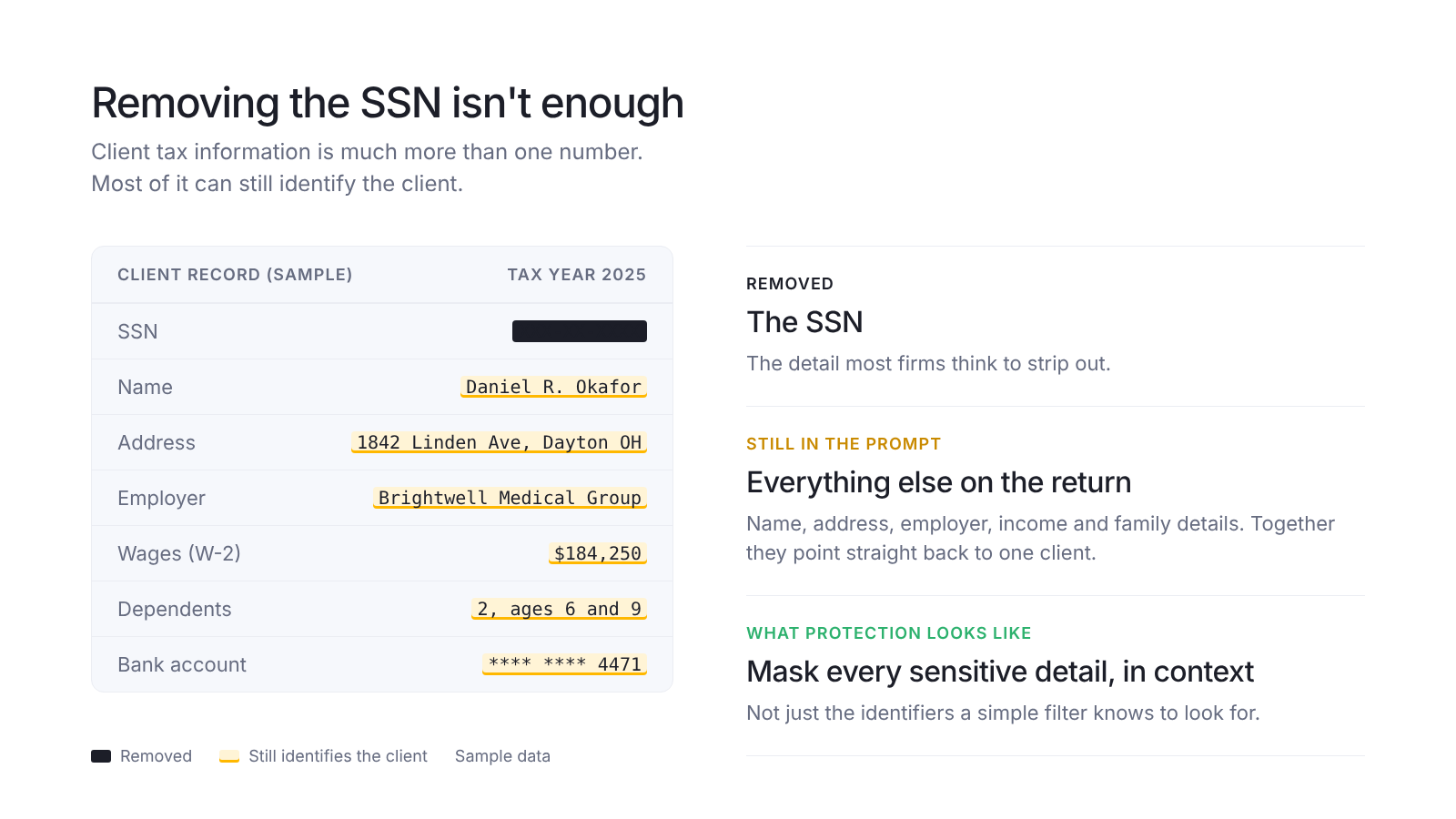
Removing SSNs. Stripping out Social Security numbers is a good habit, but it isn't enough. A client's name, address, income figures and family details can identify them just as easily, and all of it counts as tax return information.
How accounting firms can use AI safely
The firms getting this right tend to do four things:
- Know which AI tools are in use. Include them in your written information security plan, the same way you list other service providers.
- Protect client data before it leaves the firm. Sensitive details should be masked or replaced before a prompt reaches any AI model.
- Control who sees the results. Only staff who work on a client's file should see that client's real information in AI responses.
- Keep a record. Log what was shared with AI and by whom, so you can answer questions from clients, auditors or regulators.
None of this requires giving up the time AI saves. It just means putting controls around it.
Where PromptVault fits
PromptVault was built for exactly this. It finds sensitive client information in a prompt, such as names, account numbers and tax figures, and replaces it with secure tokens before anything reaches the AI model. When the response comes back, only authorized staff see the real values. Every interaction is logged for your records.
Your team keeps using ChatGPT, Copilot or other AI tools. Client data stays protected.
The bottom line
AI is already part of how tax work gets done, and that isn't going to reverse. The question for CPA firms isn't whether to use AI, but how to use it without putting client information at risk.
Curious where your firm stands? Take our 2-minutes AI exposure self-assessment or book a demo with our team. For a broader look at HIPAA, GDPR and PCI DSS, read our guide to AI compliance.
Frequently asked questions
Can accountants use AI tools such as ChatGPT with client tax data?
They can, with the right controls. Client tax information is protected under IRS Section 7216 and the FTC Safeguards Rule, so firms should treat AI tools like any other service provider: include them in the written security plan and protect client data before it reaches the AI.
Does the FTC Safeguards Rule apply to CPA firms?
Yes. The FTC names tax preparation firms as covered businesses, and the IRS states that tax and accounting professionals are considered financial institutions regardless of size. Covered firms need a written information security plan.
Is removing Social Security numbers enough to use AI safely?
No. Names, addresses, income figures and other details can identify a client just as easily, and all of it counts as tax return information. Sensitive details should be protected before any prompt reaches an AI model.